
360° motorcycle stand — GSXF
A detachable tripod system designed to mount a 360° camera on the rear luggage rack of a motorcycle, built for stability, quick assembly, and safety-driven detachment in case of impact.
I designed a detachable tripod system created specifically for motorcycles. It mounts onto the rear luggage rack and provides a secure platform for a 360° camera, enabling immersive recordings of rides from every angle.
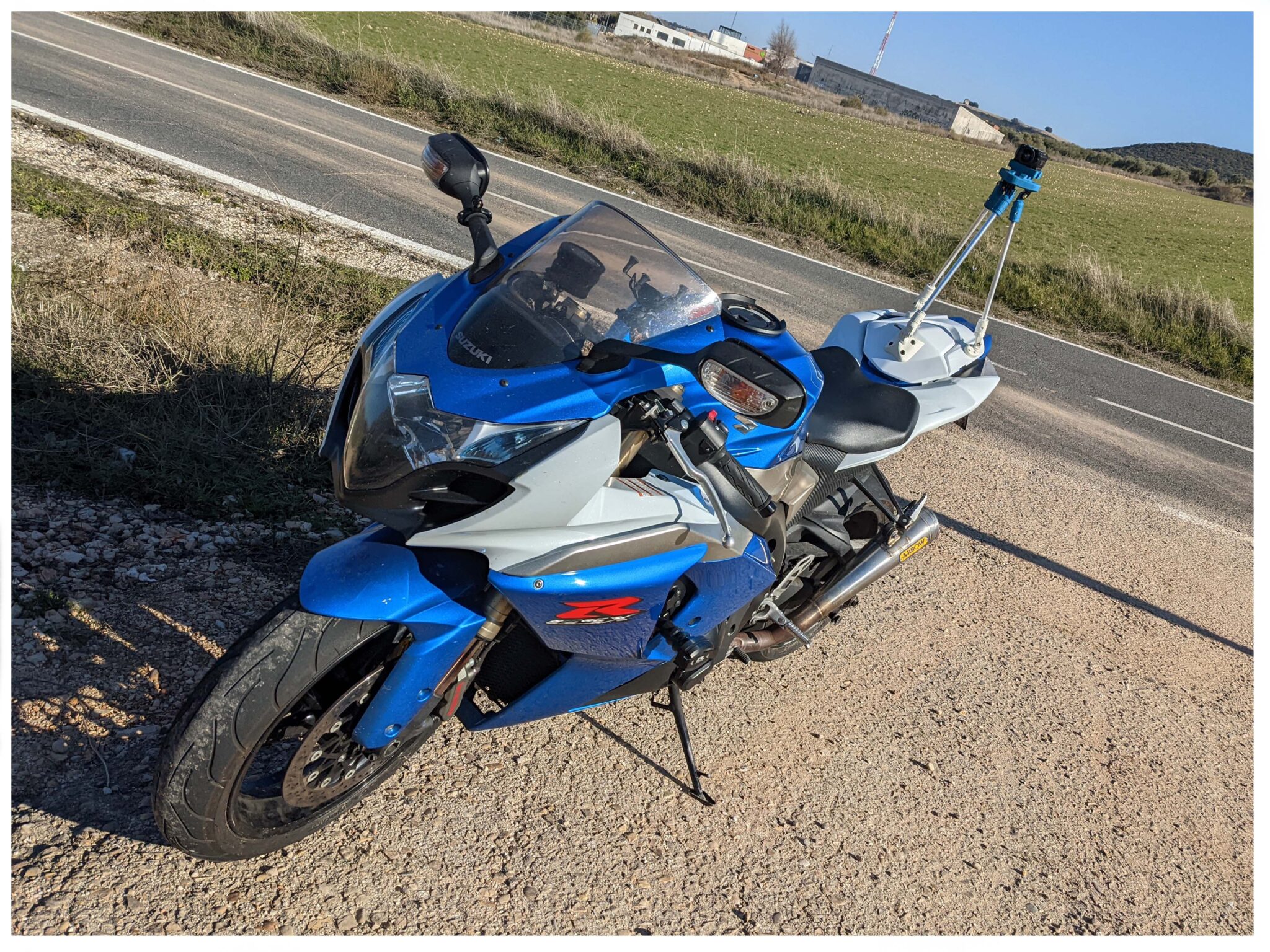
The structure combines 3D-printed components with sturdy aluminum rods, resulting in a robust and durable assembly. A key part of the design is that it can be disassembled in about 5 minutes, making it practical for real use during trips.
What differentiates this system is the non-permanent mounting philosophy. The device is designed so it can detach in the event of an accident, prioritizing rider safety and reducing the chance of the structure becoming a rigid hazard.
After initial printing tests at home, I moved to professional laser printing to ensure the final parts were safe, strong, and consistent. The system has been tested extensively in real conditions and proved its durability and usability in long-term riding scenarios.
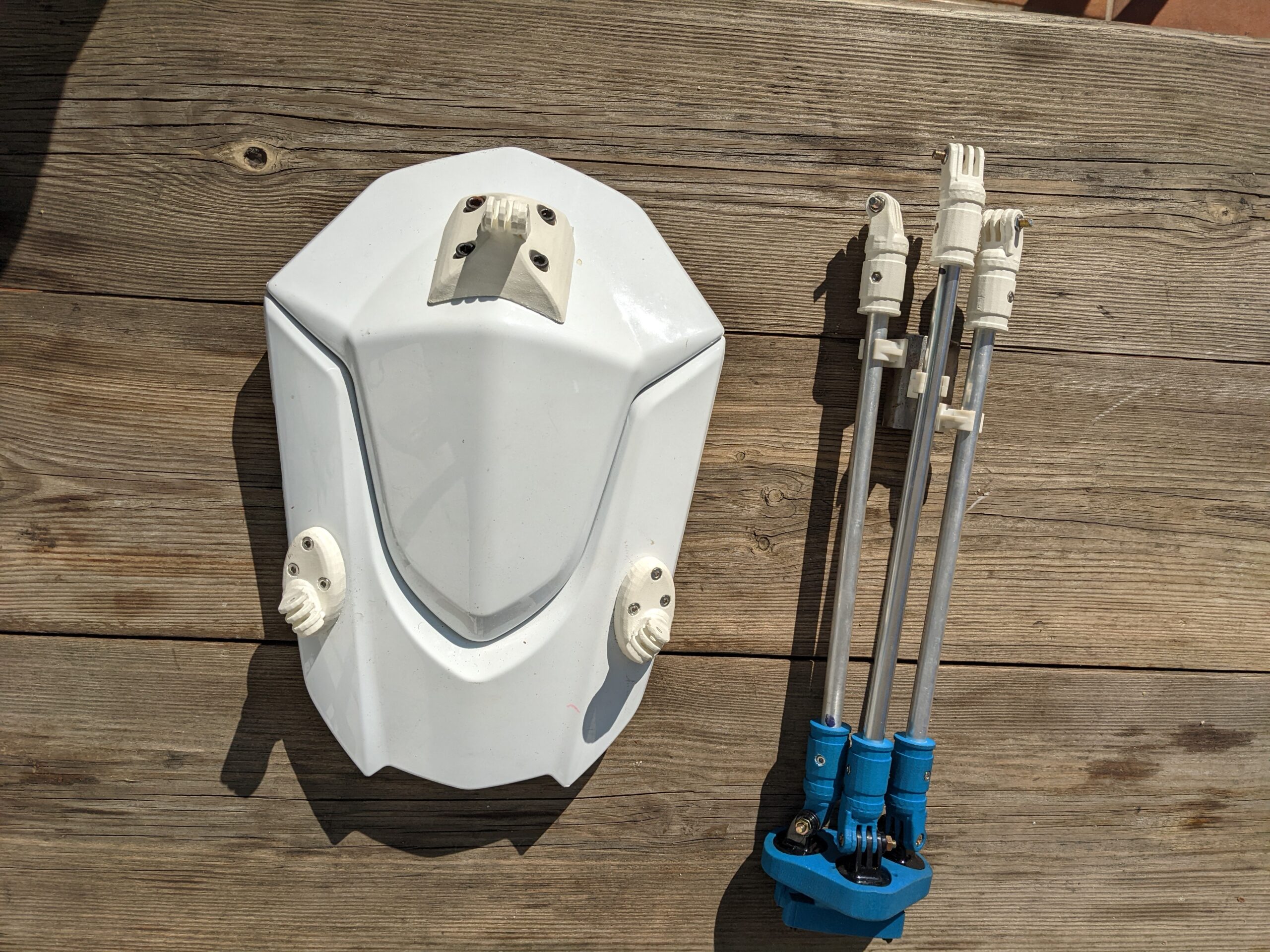
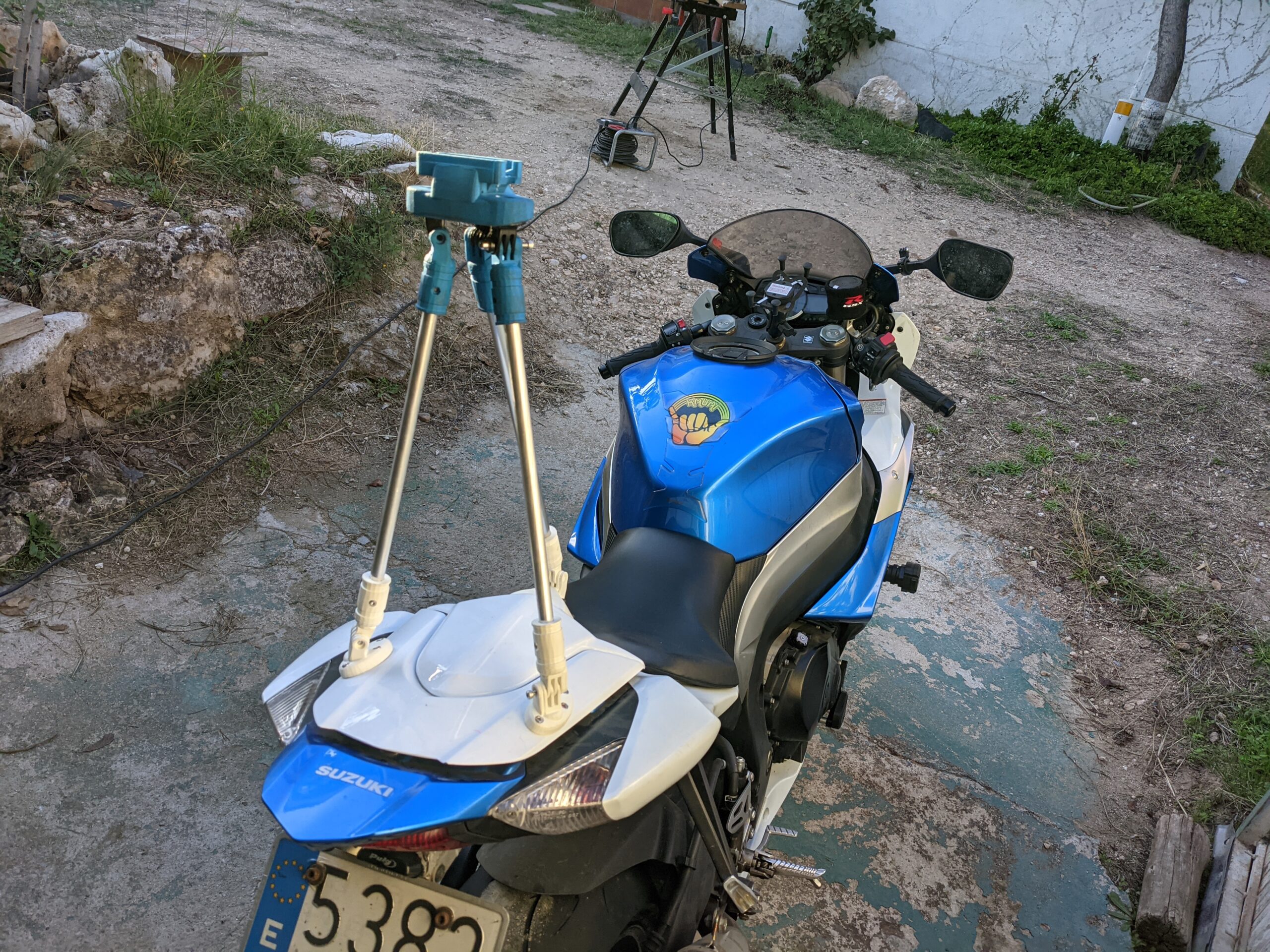
Safety and stability required more than intuition, so I ran a force analysis over the system to understand what each attachment point must withstand. The tripod is composed of three aluminum legs (~50 cm), arranged around the rack at ~30° separation, with a 360 camera installed at the tip (≈160 g).
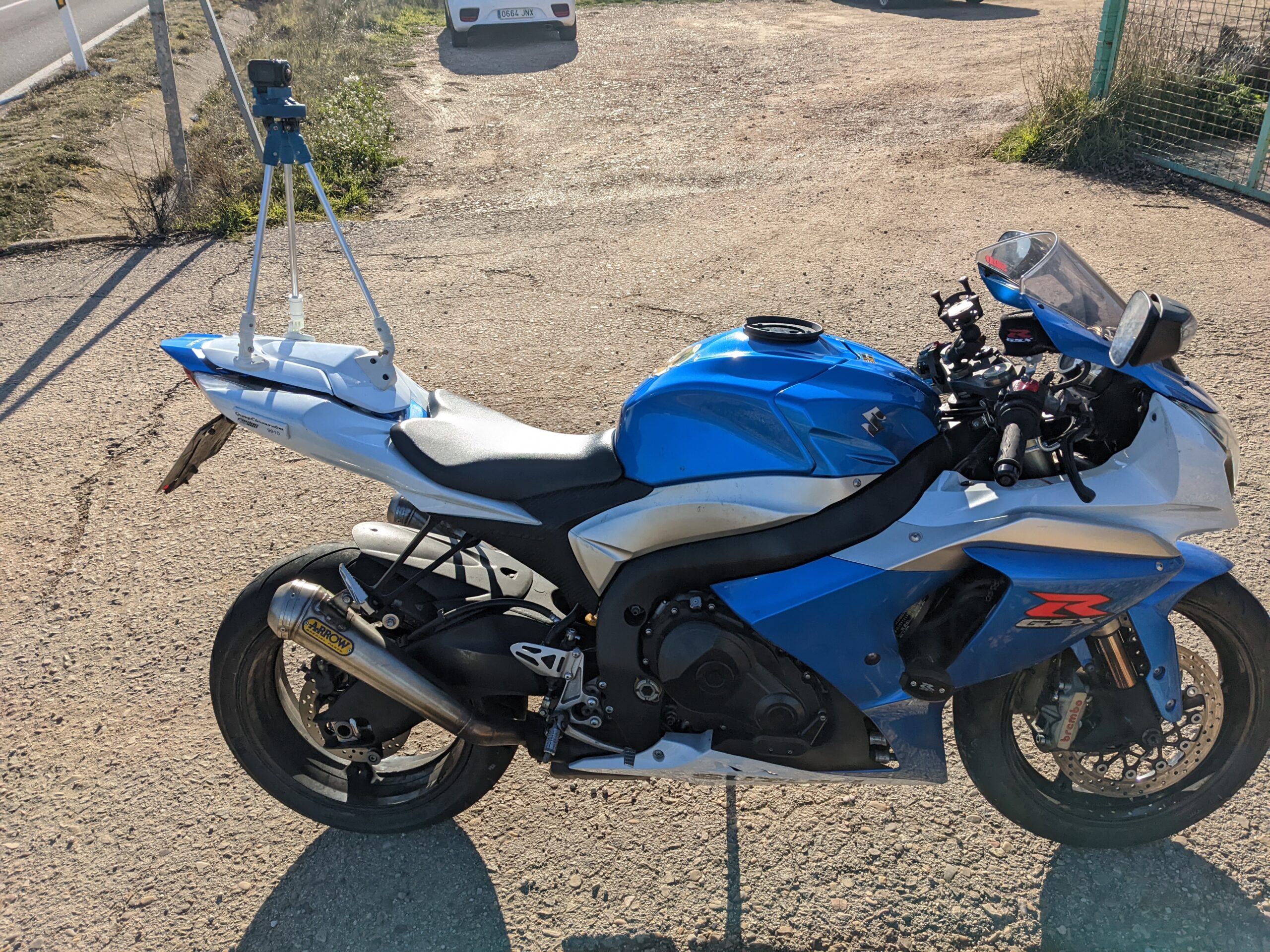
The system must handle vertical forces (weight), lateral forces (wind and road dynamics), and dynamic forces caused by accelerations, braking, and turning. At the camera mount, the design must also minimize vibration transfer to keep footage stable.
The plastic parts follow the same analysis basis as the GSXR version, because the supported forces are lower due to the shorter tripod arms. Even though the bike can reach higher speeds, the natural curve radius for this riding style is typically wider, keeping the calculation assumptions valid.
| Variable | Description | Formula |
|---|---|---|
| W | Weight of the camera | W = m * g |
| α | Angle of inclination | (depends on motorcycle position) |
| v | Motorcycle velocity | (depends on speed) |
| r | Radius of curvature | (depends on the curve) |
| F_c | Centripetal force | F_c = (m_total * v^2) / r |
| F” | Updated general force | F” = F’ + F_c |
| F_system” | Total force on the system | F_system” = F” + W |
| F_leg” | Force on each leg | F_leg” = F_system” / 3 |
| θ | Angle with vertical axis | θ = 360° / 3 |
| Fv” | Vertical force on each leg | Fv” = F_leg” * cos(120°) |
| Fh” | Horizontal force on each leg | Fh” = F_leg” * sin(120°) |
| Velocity (km/h) | Inclination (°) | Radius (m) | F_leg” (N) | Fv” (N) | Fh” (N) |
|---|---|---|---|---|---|
| 30 | 0 | 100 | 8.87 | 4.44 | -7.68 |
| 30 | 0 | 200 | 4.77 | 2.38 | -4.11 |
| 30 | 10 | 100 | 8.87 | 2.96 | -8.00 |
| 45 | 0 | 100 | 20.18 | 10.09 | -17.43 |
| 45 | 20 | 300 | 10.87 | 2.72 | -10.63 |
| 60 | 0 | 400 | 7.16 | 3.58 | -6.18 |
| 75 | 30 | 500 | 11.43 | 2.29 | -10.64 |
| 90 | 0 | 600 | 5.37 | 2.68 | -4.63 |
| 90 | 40 | 700 | 8.97 | 1.19 | -8.79 |
| 105 | 0 | 800 | 4.22 | 2.11 | -3.64 |
| 120 | 0 | 900 | 3.38 | 1.69 | -2.92 |