CubeSat — nanosatellite design project
Academic satellite engineering project developed during a specialized course in space systems design, focused on structural and hardware constraints of CubeSat platforms.
I completed a course in satellite design at the IHK University of Copenhagen (now part of DTU after rebranding). IHK is a specialized institution focused on satellite engineering, offering hands-on programs centered on real-world aerospace constraints.
During the course, I explored different satellite typologies, their applications, and the critical design considerations required to ensure mission success. One of the most demanding and rewarding projects was the design of a CubeSat, a nanosatellite standard widely used for research, education, and technology validation.
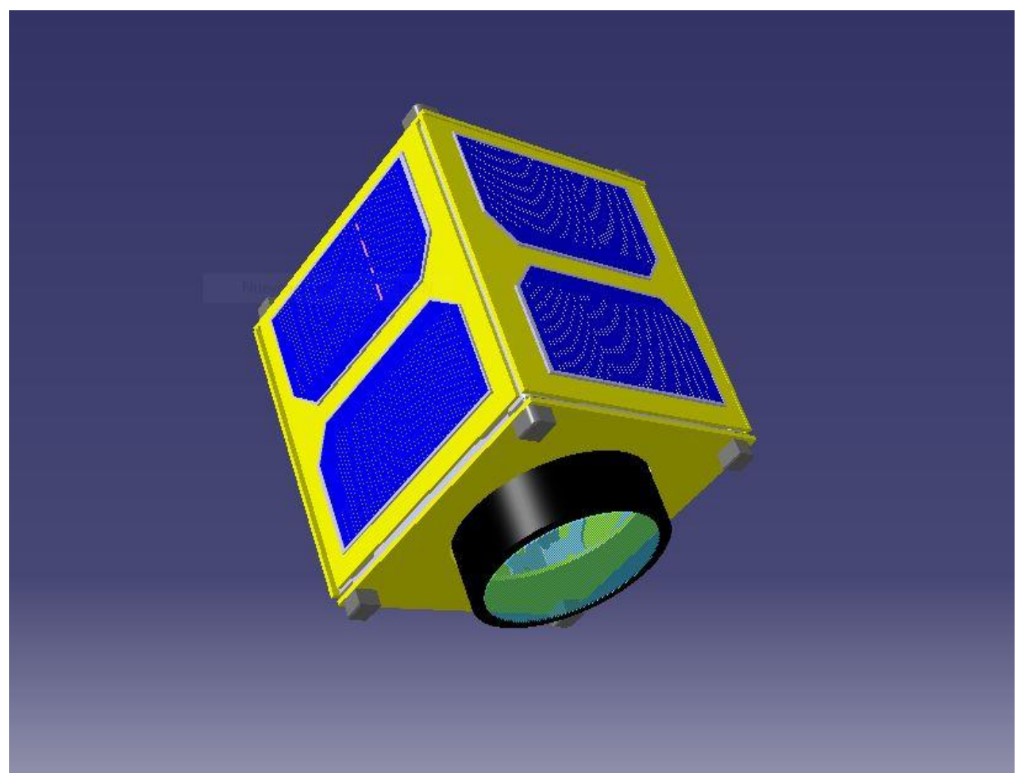
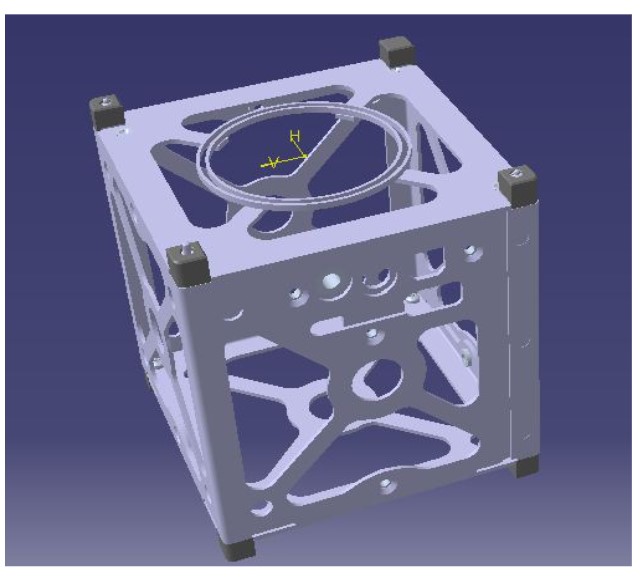
A CubeSat is based on a modular standard of 10 × 10 × 10 cm units, allowing multiple cubes to be combined into larger configurations. This standard enables reduced costs, faster development cycles, and high flexibility, while still imposing strict limitations on volume, mass, power, and thermal behavior.
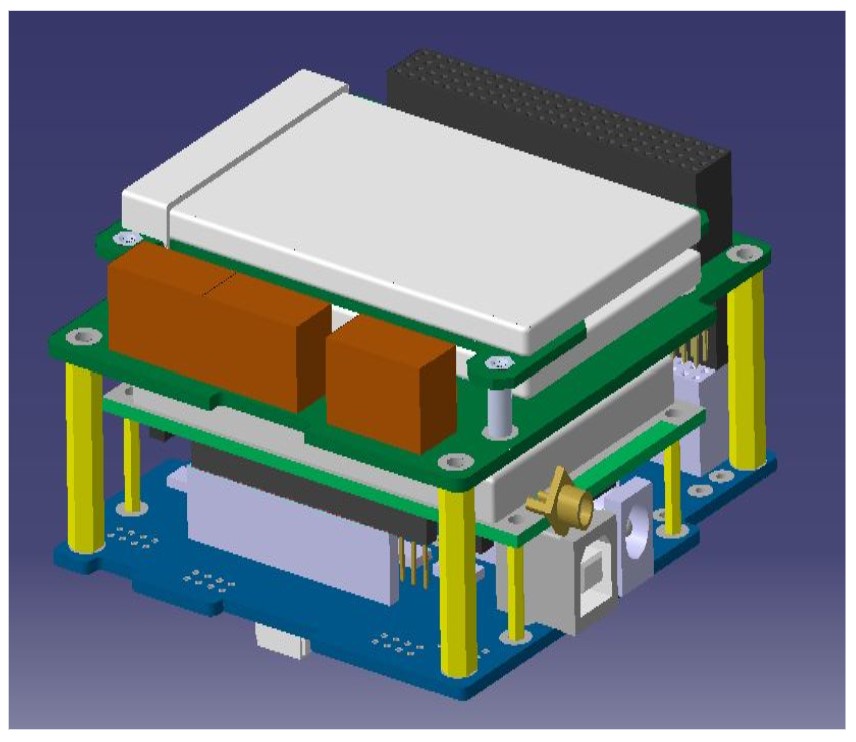
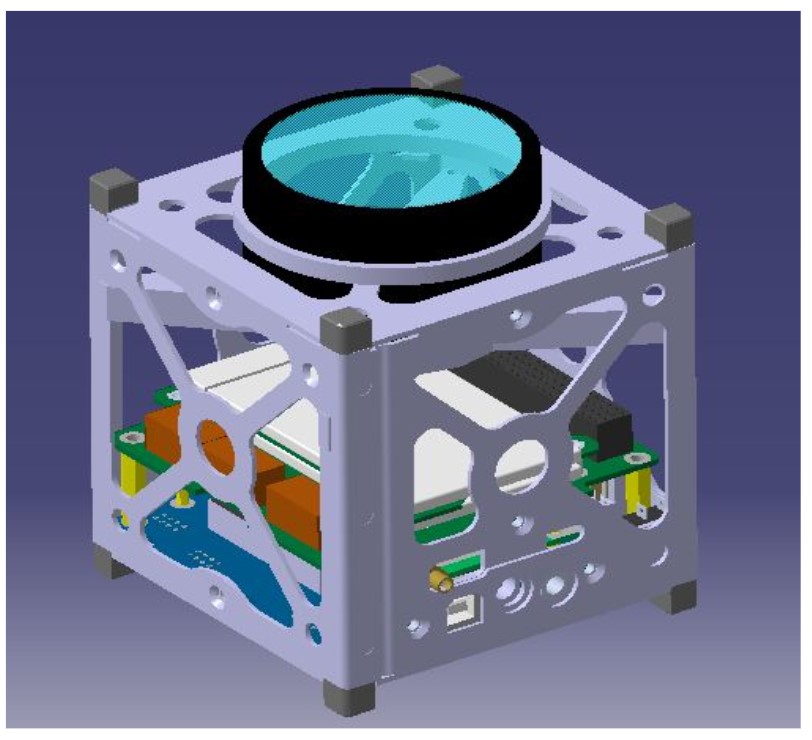
As part of the team, my responsibility focused on the hardware and structural design. My role was to ensure mechanical integrity, compliance with CubeSat standards, and compatibility with the rest of the subsystems developed by the team.
The design process required balancing multiple constraints: power consumption, communication architecture, thermal management, and structural stability under launch conditions. Collaboration was essential, as every subsystem decision had a direct impact on the others.
This experience gave me a solid understanding of space systems engineering and reinforced the importance of systems thinking, trade-off analysis, and disciplined design methodologies in highly constrained environments.